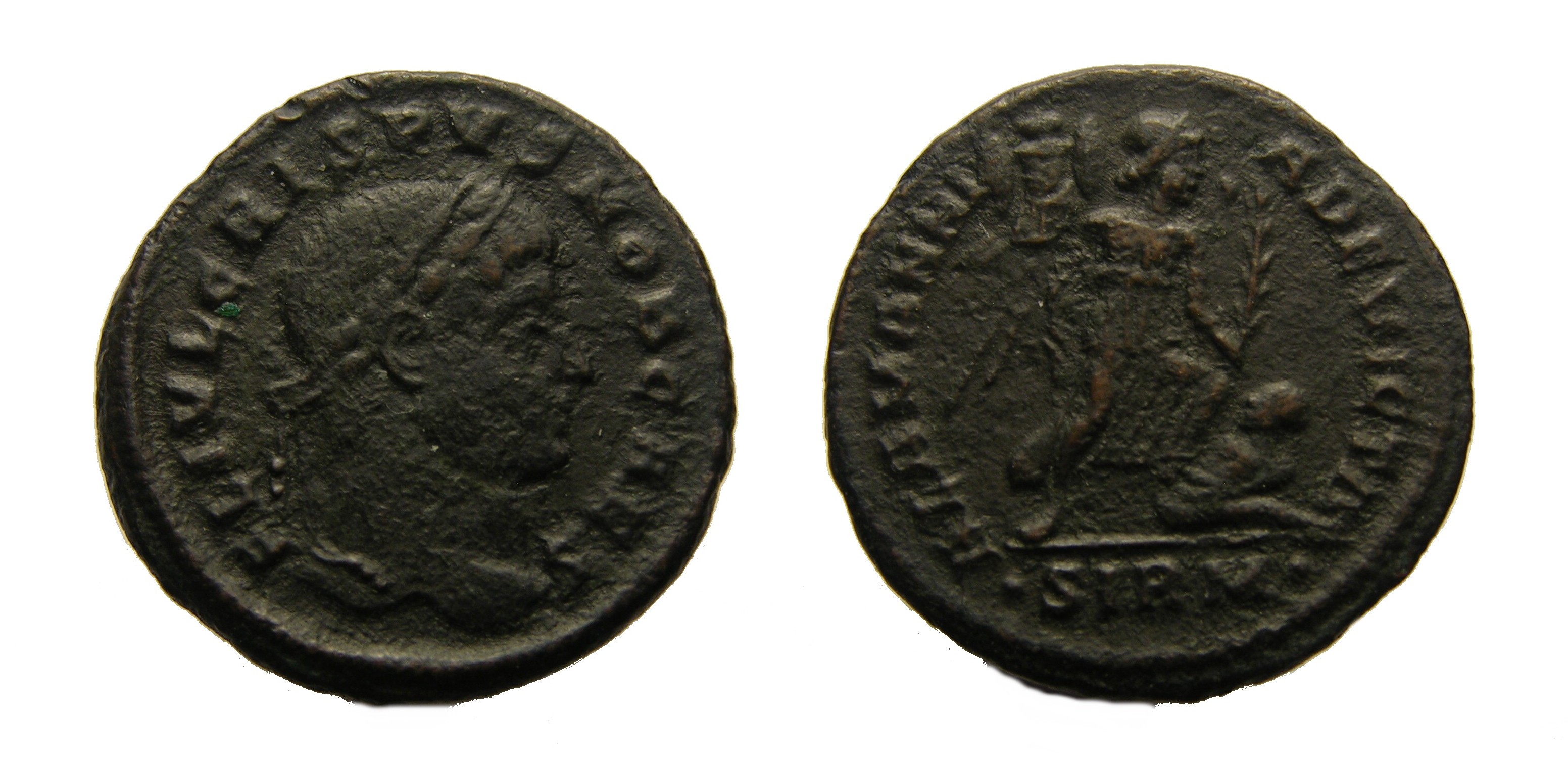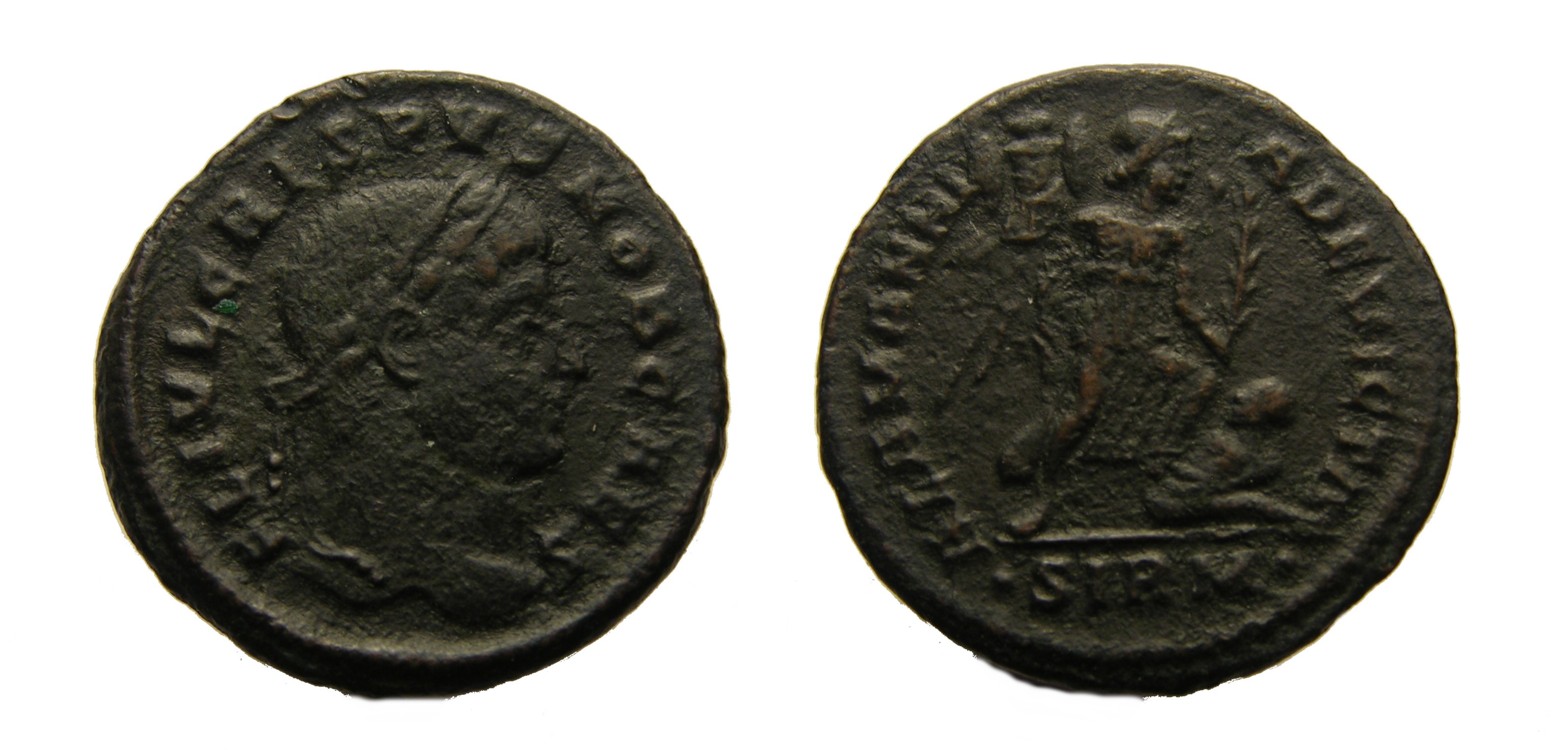
Crispus
316 to 326 AD
Son of Constantine I and Minervina; grandson of Constantius I and Helena
He was born between 299 and 305 A.D. somewhere in the Eastern Roman Empire. His
mother Minervina was either a concubine or a first wife to Constantine. His
father served as a hostage in the court of Eastern Roman Emperor Diocletian in
Nicomedia. By 317 Constantine reigned as an Western Roman Emperor and his
brother-in-law Licinius as an Eastern Roman Emperor. On March of the same year
three new Caesars were proclaimed. Crispus alongside his younger half-brother
Constantine II and his first cousin Licinius Junior. Constantine appointed
Crispus as Commander of Gaul. In January, 322 A.D., Crispus was married to
Helena, and in October, 322 bore him a son. There is no surviving account of the
name or later fate of the son. Crispus had victories against the Franks and the
Alamanni and thus secured the continued Roman presence in the areas of Gaul and
Germania. The soldiers adored him thanks to his strategic abilities and the
victories to which he had led the roman legions. After he defeated Emperor
Licinius in 324, Crispus was the most likely choice for an heir to the throne at
the time. His siblings Constantine II, Constantius II and Constans were far too
young and inexperienced. In 326, Crispus was suddenly executed according to the
orders of his own father. It has been reported that Fausta, step-mother of
Crispus, was extremely jealous of him. She was afraid that Constantine would put
aside the sons she bore him. So, in order to get rid of Crispus, Fausta set him
up. She reportedly told the young Caesar that she was in love with him and
suggested an illegitimate love affair. Noble and shy Crispus denied the immoral
wishes of Fausta and left the palace in a state of a shock. Then Fausta said to
Constantine that Crispus had no respect for his father, since the Caesar was in
love with his father's own wife. She reported to Constantine that she dismissed
him after his attempt to rape her. Constantine believed her and, true to his
strong personality and short temper, executed his beloved son. A few months
later, Constantine reportedly found out the whole truth and then executed his
wife Fausta at the end of 326 A.D. Crispus also suffered damnatio memoriae,
meaning his name was never mentioned again and was deleted from all official
documents and monuments. Crispus, his wife Helena and their son were never to be
mentioned again in historical records.
Click on coin images to enlarge
Crispus
Mint: Thessalonica
316 to 326 AD
AE 3
Obvs: IVL CRISPVS NOB C
Revs: PROVIDENTIAE CAESS, camp gate. SMTSΓ
20mm, 3.2g
$12.00
Order # LR 022
Ref: RIC VII.519.155